Analyses • Commodities • Strategic Materials
Rare Earths & Critical Metals — What Traders Should Know
Rare earths are not “rare” in the geological sense — but their processing is one of the most concentrated bottlenecks in modern supply chains. For traders, that means sharp volatility around policy headlines, cyclical demand from industry, and occasional trend phases that can be traded with structure.

1) Why Rare Earths Matter Now
Rare earth elements (REEs) and critical metals sit at the intersection of technology, energy transition, and geopolitics. They are key inputs for: EV drivetrains, wind turbine generators, industrial motors, semiconductors, defense systems, and advanced electronics.
What makes REEs especially interesting for market participants is not just end-demand — it’s the extreme concentration of refining and separation capacity. Even when mining expands outside Asia, many supply chains still funnel into a limited number of processing hubs. That’s why policy decisions (export controls, tariffs, sanctions, quotas), environmental regulation, and strategic stockpiling can move prices quickly.
Trader’s takeaway
REE markets can behave more like policy-driven volatility instruments than classic “supply/demand” commodities. Expect headline gaps, sudden repricings, and regime shifts — especially when key jurisdictions change trade policy.
2) What Counts as “Rare Earths” (and What Doesn’t)
“Rare earths” typically refers to a group of 17 elements (the lanthanides plus scandium and yttrium). In practice, markets often focus on a smaller subset that matters most for modern industry: NdPr (Neodymium + Praseodymium) for permanent magnets, plus Dysprosium and Terbium for high-temperature performance and specific tech applications.
Light Rare Earths (LREE)
- Lanthanum (La) — catalysts, optics, industrial chemistry
- Cerium (Ce) — polishing powders, catalysts
- Praseodymium (Pr) — permanent magnets (NdPr)
- Neodymium (Nd) — permanent magnets (NdPr)
- Samarium (Sm) — magnets, niche defense/industrial uses
Heavy Rare Earths (HREE)
- Dysprosium (Dy) — high-temp magnets (critical for EVs/wind)
- Terbium (Tb) — phosphors, displays, lasers
- Yttrium (Y) — LEDs, ceramics, specialty materials
- Erbium / Holmium / Thulium / Ytterbium / Lutetium — lasers, fiber optics, high-tech niches
Important nuance: REEs are not traded like oil, gold, or copper. There is no single deep, centralized “global spot market” with universal benchmarks. Pricing can be fragmented, contract-based, and sensitive to local regulations and supply-chain frictions.

3) World Map — Where Supply Chains Concentrate
Rare earth markets are less about “global balance” and more about where processing capacity sits. Even if mining expands in Australia, the US, or Africa, the bottleneck often remains separation/refining and downstream magnet supply chains.
4) Applications — What These Elements Are Used For
This table is designed for fast scanning: which elements matter, what they’re used for, and what end-markets drive demand. In most “tradeable” narratives, the market focus narrows to NdPr + Dy + Tb (magnets and high-temperature performance).
| Element | Category | Core applications | Key end-markets |
|---|---|---|---|
| Nd (Neodymium) | REE (Magnet) | NdFeB permanent magnets (high power-to-weight) | EV motors, wind turbines, industrial robotics, consumer electronics |
| Pr (Praseodymium) | REE (Magnet) | NdPr magnet alloys; specialty glass additives | EVs, wind, aerospace/industrial motors |
| Dy (Dysprosium) | REE (Magnet) | Improves high-temperature performance of NdFeB magnets | EV drivetrains (thermal stability), wind turbines, defense |
| Tb (Terbium) | REE (Specialty) | Phosphors, displays, lasers, magnet additives | Displays/lighting, electronics, high-tech components |
| Ce (Cerium) | REE (Industrial) | Polishing powders; catalysts | Semiconductor polishing chain, automotive, industrial processes |
| La (Lanthanum) | REE (Industrial) | Catalysts; optical glass; industrial chemistry | Refining/chemical, industrial manufacturing |
| Y (Yttrium) | REE (Specialty) | LED phosphors; ceramics; specialty alloys | Lighting, advanced ceramics, aerospace alloys |
| Sm (Samarium) | REE (Magnet) | SmCo magnets (very high temperature stability) | Defense, aerospace, niche industrial motors |
| Eu (Europium) | REE (Specialty) | Red phosphors for displays and lighting | Displays, lighting |
| Er (Erbium) | REE (Specialty) | Fiber optics amplifiers; lasers | Telecom, lasers, high-tech |
| Lu (Lutetium) | REE (Specialty) | Medical imaging; catalysts (niche) | Healthcare, specialty chemistry |
5) The Real Story: Supply-Chain Bottlenecks
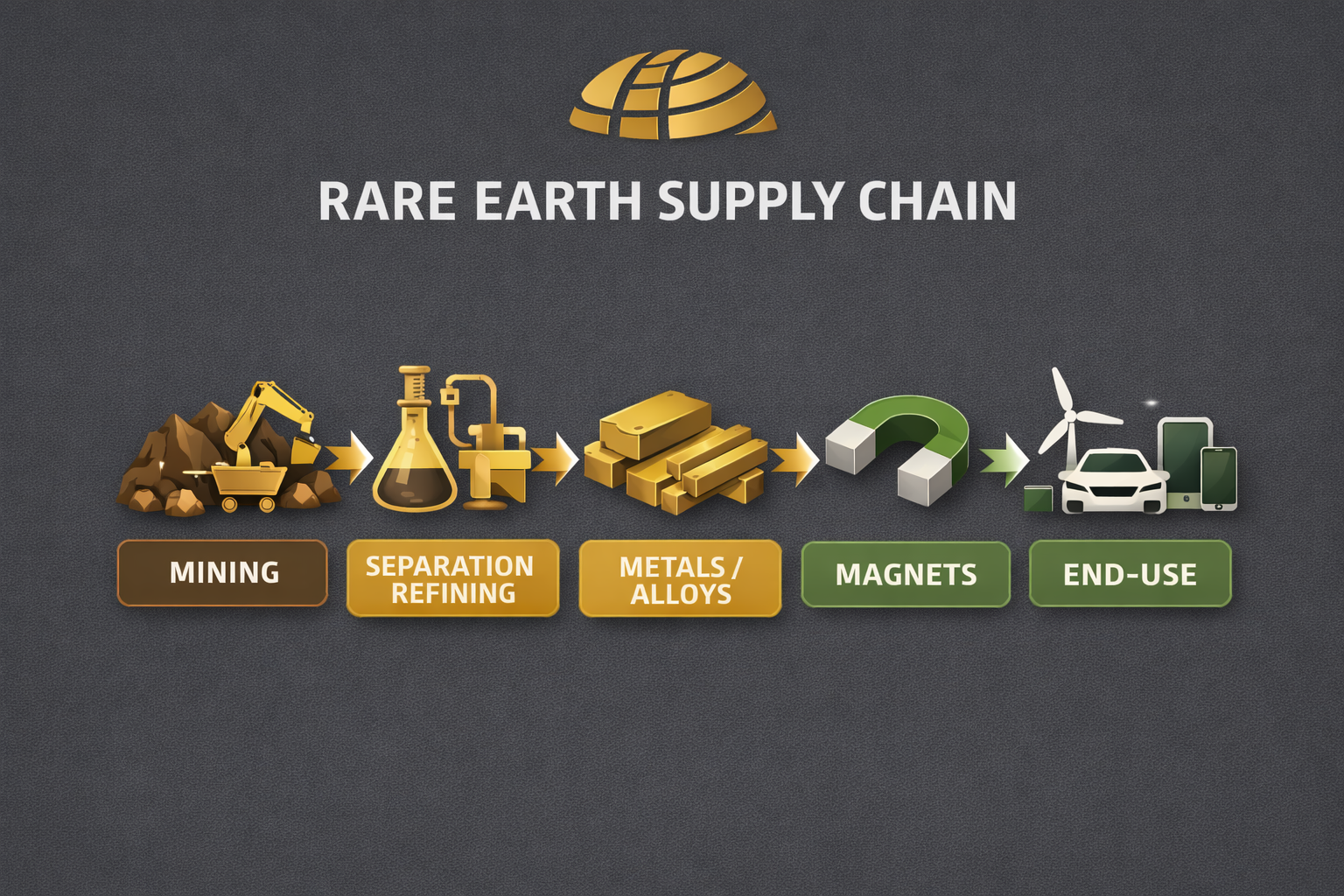
The REE supply chain has multiple stages: mining → concentration → separation/refining → metal/alloy → magnet manufacturing. Traders often focus on mining projects, but the highest leverage point is frequently the separation/refining stage. That’s where capacity is most concentrated and where technical and regulatory barriers are highest.

Trader’s takeaway
Price shocks are often triggered by processing constraints or policy action, not just by “ore in the ground.” Watch regulation and headline risk where refining and magnet manufacturing are concentrated.
6) Charts - Comming soon
Chart A — Theme Basket vs Macro Proxies
Chart B — Volatility & Event Windows
Chart C — Macro Filter
Chart D — Seasonality Snapshot
7) Critical Metals: The “Tradeable” Neighbors
Many traders who want exposure to the same macro theme (“electrification + energy transition”) use more liquid instruments. These are not rare earths, but they sit in the same narrative and are often easier to trade via futures, CFDs, or large ETFs.
| Metal | Why it matters | What typically moves it |
|---|---|---|
| Lithium | Battery supply chain (EVs, storage) | Capacity expansions, demand cycles, contract repricing |
| Nickel | Batteries + stainless steel | Oversupply/undersupply, Indonesian output, macro risk |
| Cobalt | High-performance battery chemistries | Supply concentration risk, substitution trends |
| Graphite | Battery anodes | Export policy, processing capacity, EV demand |
| Copper | Electrification backbone | Global growth, infrastructure, USD rates, inventory |
Note: Copper and nickel futures are widely accessible and can serve as “macro proxies” — while REEs often express supply-chain and policy risk more directly through equities or specialty exposure models.
8) What Moves Rare Earth Prices?
Because REEs are linked to strategic industries, they can react quickly to both macro and micro signals. Below are the most common catalysts traders should track.
- Policy decisions & export controls: changes in licensing, tariffs, restrictions, or quotas can reprice the market quickly.
- EV and wind installation cycles: magnet demand is linked to industrial production and deployment schedules.
- Inventory & stockpiling: government and corporate stockpiles can reduce float and amplify moves.
- Substitution & tech shifts: reduced-REE magnets, alternative motors, recycling capacity.
- Funding cycles for miners: rates and risk appetite influence supply expansion.
9) How Traders Get Exposure (Expanded Options)
Most market participants access the rare earth theme via ETFs, equities, and liquid proxies (copper/nickel, risk indices). In German-speaking markets there is also a separate category: physical/tangible-asset exposure (technology metals & rare earth materials held via custody/storage concepts). Each route has different liquidity, pricing transparency, and risk characteristics.
A) ETFs / ETPs
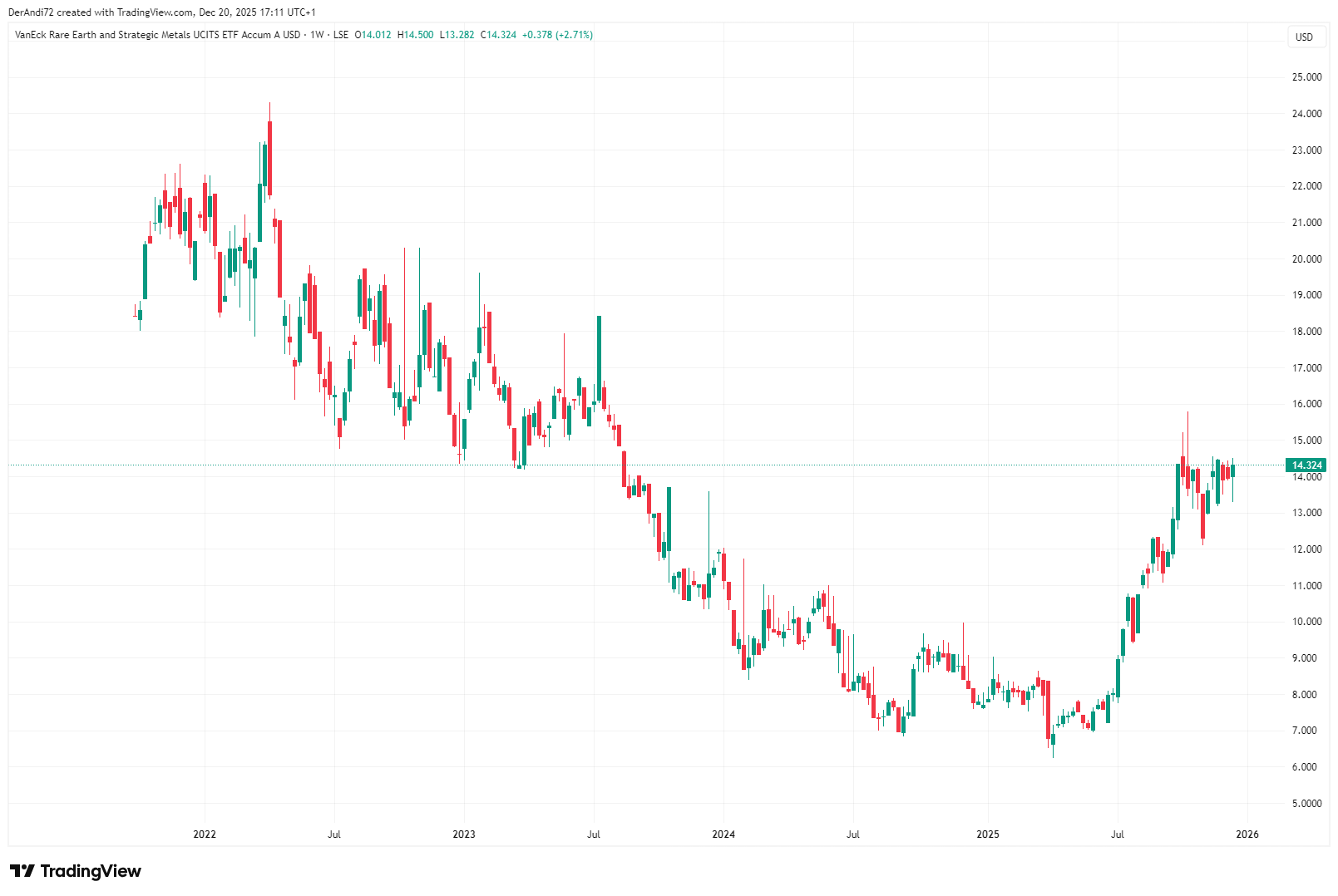
- Rare earth / strategic metals ETFs (typically baskets of miners and processors)
- Battery metals ETFs (lithium / nickel / cobalt) as theme-adjacent exposure
- Clean energy / electrification baskets (indirect demand exposure)
Best for: liquidity, position sizing, and systematic trading. Downside: baskets can dilute “pure” REE exposure.
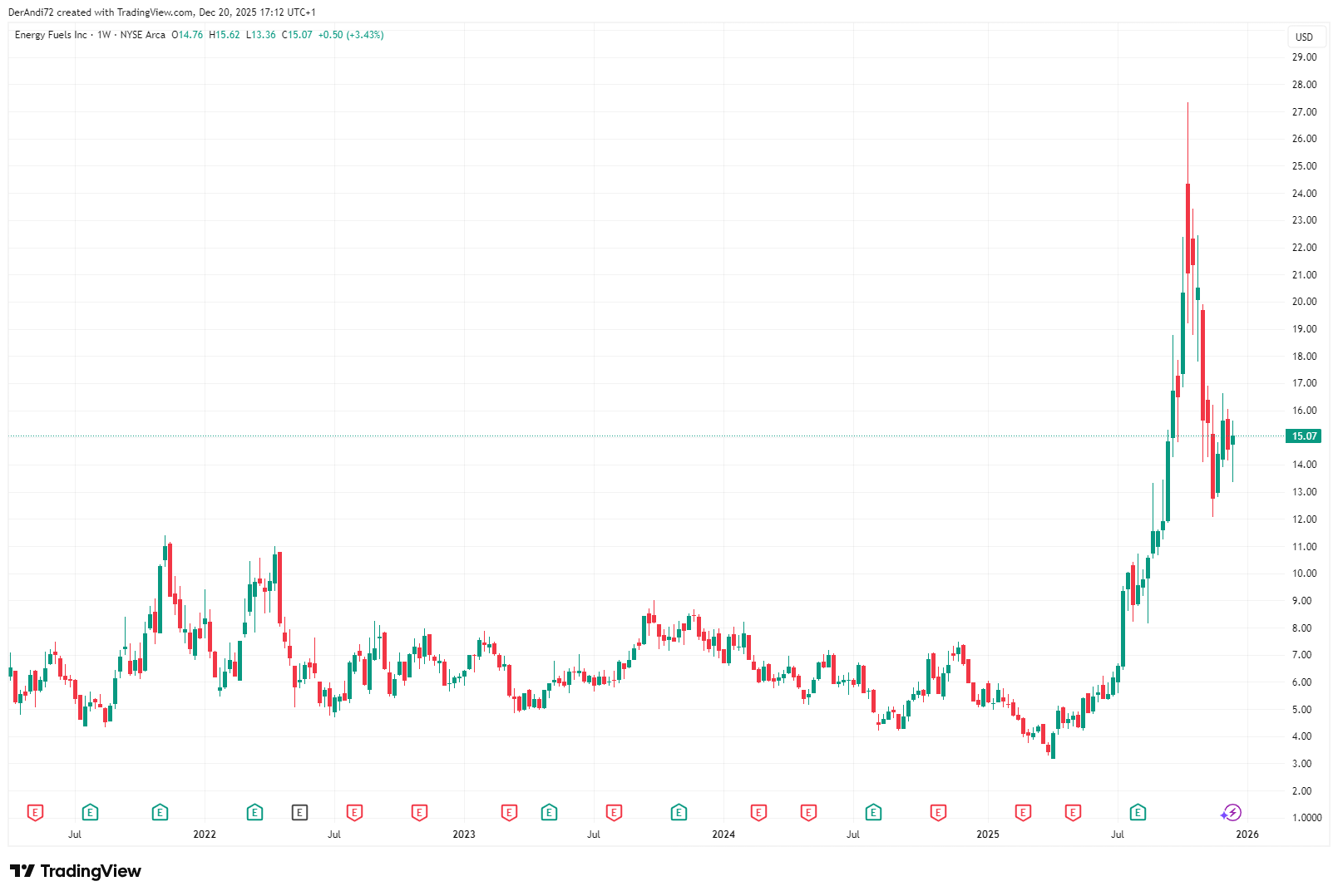
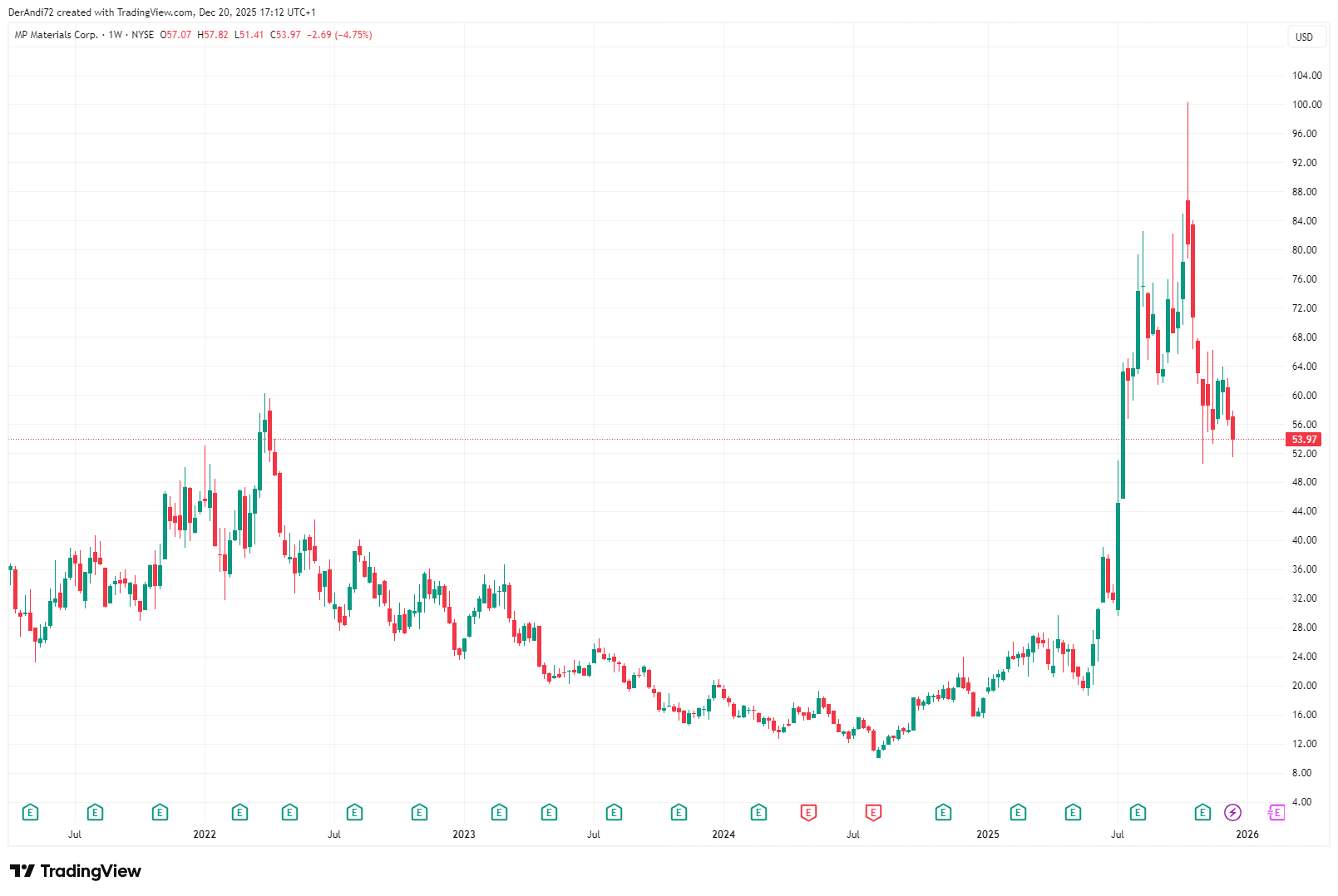
B) Single Stocks (Higher Beta)
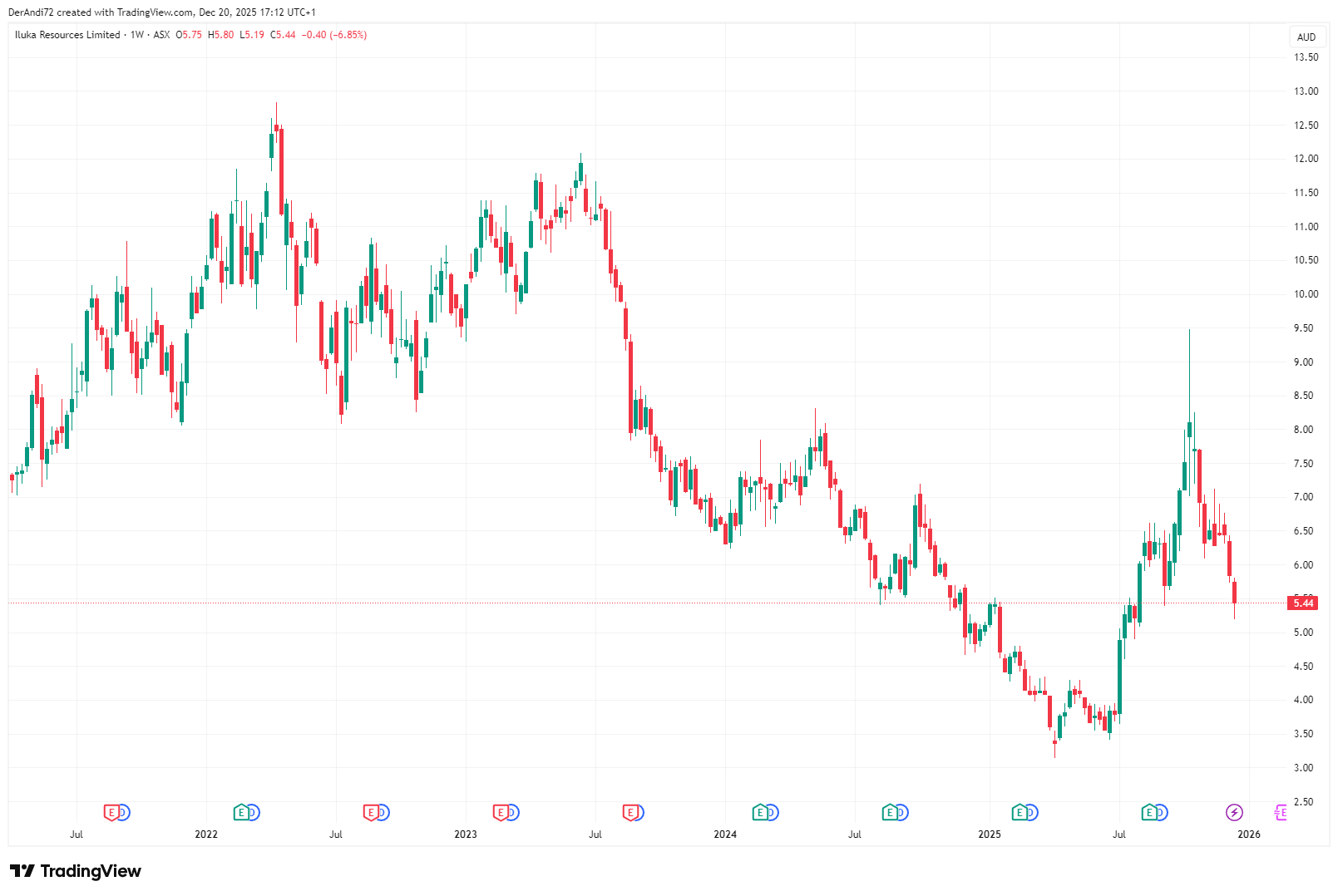
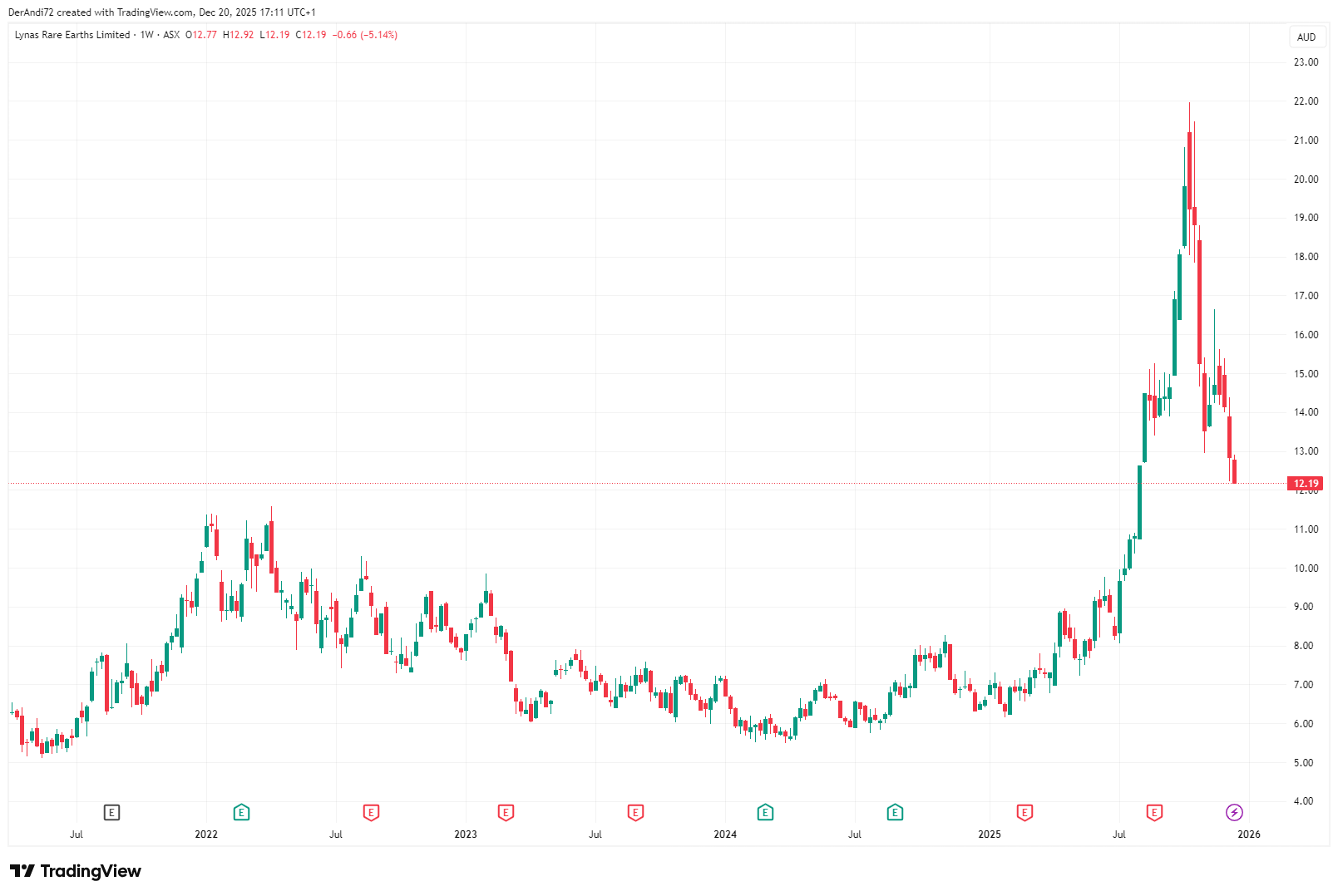
- Producers, processors, and developers (project & financing risk matters)
- Downstream (magnets, materials tech, specialty chemistry)
- Higher sensitivity to policy headlines, subsidies, and capex cycles
Best for: catalyst-driven moves and trend phases — but expect gap risk and stock-specific shocks.
C) Physical / Custody Models (Selected Providers)
Some providers offer access to physical technology metals and rare earth materials held via custody/storage concepts. This is structurally different from ETFs and equities: liquidity can be lower, pricing can be less transparent, and spreads/fees matter more.
- Noble BC — technology metals and rare earths as a physical basket concept. (Noble Portfolio)
- Seltene Erden AG — company information around acquiring and holding technology metals/rare earths (see their FAQ). (FAQ)
- TRADIUM — supplier of technology metals & rare earths; also references “physical assets” solutions on their site. (tradium.com)
- selteneerden.de — educational resource around rare earths (elements, uses, political dimension). (selteneerden.de)
D) Industrial Sourcing (B2B / Not a Trading Instrument)
Some companies operate as industrial suppliers of rare earth oxides/metals and specialty raw materials. This is typically relevant for procurement, research, and manufacturing rather than “retail investing”.
- PROJECTOR GmbH (Germany) — supplies industrial customers with metals, rare earths and specialty chemicals. (projector-germany.de)
Use-case for traders: understanding product forms (oxides/metals), purity specs, industrial demand, and supply chain language.
E) Authorities & Research (Germany / EU)
For a high-quality analysis section, anchor your claims in authoritative sources and keep a few neutral references on your page.
- DERA (German Mineral Resources Agency) — German reference platform for mineral raw materials, including rare earths. (DERA Rare Earths)
- DERA/BGR study note — releases on global REE projects (use as a neutral supply-side reference). (BGR note)
- Eurostat — EU import statistics for rare earth elements (high-value context for “dependence risk”). (Eurostat news)
- Destatis — Germany import statistics and sourcing shares (helpful for a DE-focused audience). (Destatis release)
- Institute for Rare Earths & Strategic Metals — publishes price references and “quotes” services (use with caution; note update frequency on free pages). (Price index page)
F) Proxies (Most Liquid Instruments)
- Copper and nickel for industrial demand risk
- Indices (e.g., NASDAQ) for “risk-on/risk-off” regimes
- FX / rates filters (USD strength and real yields often matter)
Best for: systematic trading and tight execution — but exposure is indirect (theme proxy rather than REE-specific).
Trader’s takeaway
Think in “lanes”: ETFs/stocks for tradable volatility + trend phases, physical/custody models for long-horizon thematic exposure (with liquidity constraints), and DERA/Eurostat/Destatis to anchor your analysis in reliable references.
10) Tradeability Matrix — Choosing the Right Exposure
This matrix helps readers understand why “rare earth exposure” can mean very different things in practice. It’s also great for preventing mismatched expectations (e.g., expecting ETF-like liquidity from a physical custody model).
| Exposure type | Liquidity | Pricing transparency | Typical time horizon | Primary risks / trade-offs |
|---|---|---|---|---|
| ETF / ETP | High | High | Days → months | Basket dilution; equity beta; macro sensitivity; occasional gap risk |
| Single stocks | Medium–High | High | Days → years | Company-specific shocks; financing/dilution risk; project delays; headline gaps |
| Physical / custody models | Low–Medium | Low–Medium | Years | Spreads/fees; exit/settlement friction; custody/insurance/jurisdiction; pricing opacity |
| Industrial suppliers (B2B) | N/A | N/A | N/A | Not a trading vehicle; useful for supply-chain understanding rather than speculative exposure |
| Liquid proxies (Cu/Ni, indices) | Very high | Very high | Intraday → months | Indirect exposure; theme may diverge; requires a clear macro/regime framework |
Practical rule of thumb
If your edge is execution and you want tight risk control: lean on ETFs/stocks/proxies. If your goal is long-horizon thematic exposure: physical routes can fit — but only if liquidity constraints and fees are acceptable.
11) A Simple Trading Framework (How to Make It Systematic)
To keep REE trades structured (and avoid getting chopped by headlines), it helps to define a repeatable framework:
Step 1: Regime Filter
- Risk-on vs risk-off (index trend + volatility)
- USD trend and rates as a macro filter
- Industrial activity proxies (PMI, manufacturing momentum)
Step 2: Catalyst Calendar
- Trade policy updates and export licensing news
- Major earnings / guidance from key producers
- Government critical minerals announcements
Step 3: Execution Rules
- Use ATR-based risk sizing (volatility-aware)
- Define invalidation levels (structure-based stop)
- Consider partial exits into spikes (headline-driven)
Daytrader note
If you trade indices (e.g., NASDAQ/US100) alongside commodities, treat “REE headline shocks” as risk sentiment events. Policy escalations can spill into tech and industrial sectors quickly — so keep a cross-market watchlist.
12) Key Risks (Read This Before You Trade It)
- Liquidity & pricing opacity: many REE “spot” references are not as transparent as major futures markets.
- Gap risk: policy headlines can trigger large overnight moves in equities/ETFs.
- Project & financing risk: developers can be diluted or delayed; timelines matter.
- Substitution risk: technology can reduce intensity of REE usage over time.
- Concentration risk: supply chains depend on few jurisdictions and companies.
Further Reading & Sources
Use these links to verify claims, track policy shifts, and keep your analysis anchored in high-quality references. (I recommend putting this box near the end of the article — readers love having a “source panel”.)
Authorities & Statistics (high confidence)
- DERA — Rare Earths overview (Germany)
- BGR/DERA — note on the REE study and global projects (2025)
- Destatis — Germany rare earth import statistics (2025 release)
- Eurostat — EU rare earth imports (2025 news item)
Industry / Market Context (useful, but interpret critically)
- TRADIUM — technology metals & rare earths supplier (Frankfurt)
- PROJECTOR GmbH — rare earths & raw materials supplier
- selteneerden.de — educational element overview & applications
- Institute for Rare Earths & Strategic Metals — price index page
Selected providers (physical / custody models)
Conclusion
Rare earths and critical metals are a strategic market with a unique structure: highly concentrated processing, policy-sensitive supply chains, and demand tied to electrification and high-tech manufacturing. For traders, the opportunity is not constant — it’s episodic. But when catalysts align, REE-related instruments can deliver strong trend moves and volatility expansions.
The edge comes from staying systematic: define your regime, map catalysts, manage gap risk, and use liquidity-friendly proxies when needed.
Want more analysis like this?
Explore more commodity and macro tools on cot-trader.com — including seasonality workflows, COT-based overlays and trading frameworks designed for real-world execution.